
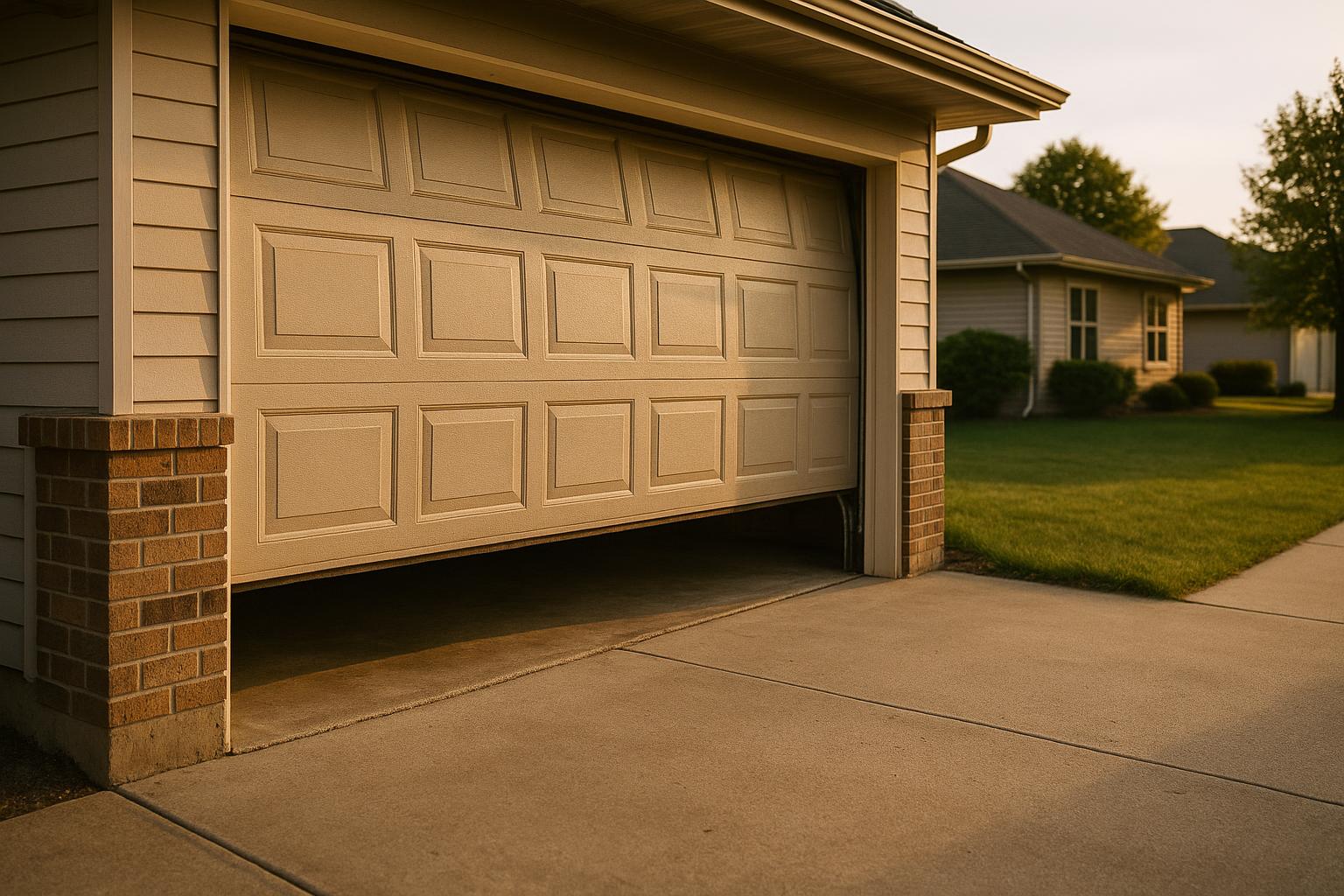
That Frustrating Moment When Your Garage Door Won't Stay Closed
You press the button on your remote, watch your garage door glide downward, and then — just inches from the floor — it stops and reverses back up. You try again. Same thing. Maybe it works on the third attempt, maybe it doesn't. Either way, you're left standing in your Broken Arrow driveway wondering what just happened.
This is one of the most common garage door complaints we hear at Precision Garage Door, and the good news is that it's usually fixable. The bad news? Ignoring it can leave your garage — and everything inside it — exposed to weather, pests, and security risks. Let's walk through the most likely causes and what you can do about each one.
Understanding Why Your Garage Door Reverses
Modern garage door openers are equipped with safety mechanisms designed to prevent the door from closing on a person, pet, or object. These are required by federal law and have prevented countless injuries since they became mandatory in 1993. But when something goes wrong with these systems — or with other components of your garage door — the opener may think there's an obstruction even when there isn't one.
Here are the most common reasons your garage door reverses before reaching the floor.
1. Misaligned or Dirty Safety Sensors
Every garage door opener manufactured after 1993 has two photo-eye sensors mounted near the bottom of the door tracks, one on each side. These sensors send an invisible beam across the opening. If anything breaks that beam while the door is closing, the opener reverses the door immediately.
Over time, these sensors can become:
- Misaligned — A bump from a bike, lawnmower, or even vibration can knock a sensor out of position so the beam no longer connects.
- Dirty — Dust, cobwebs, and grime build up on the sensor lenses, especially here in Oklahoma where wind carries plenty of debris.
- Damaged — Wiring can fray, connections can corrode, and the sensors themselves can fail.
Start by wiping both sensor lenses with a soft cloth. Then check that both sensors have a steady light (usually green) rather than a blinking one. If one is blinking, it's likely misaligned. Gently adjust it until the light holds steady. If that doesn't solve the problem, the wiring or the sensor itself may need replacement.
2. Incorrect Close-Limit Settings
Your garage door opener has close-limit settings that tell it how far the door should travel before it's considered fully closed. If these settings are off — telling the door to travel farther than it physically can — the opener interprets the resistance of the floor as an obstruction and reverses.
This is especially common after a new opener installation or if someone has recently adjusted the settings. On most openers, the close-limit adjustment is a screw or dial on the back or side of the motor unit. Small adjustments can make a big difference, but be careful — setting the limit too aggressively can cause the door to slam into the ground without proper resistance detection.
If you're not comfortable making this adjustment yourself, this is a quick fix for a professional technician.
3. Worn or Damaged Rollers and Tracks
Garage doors rely on rollers that glide along metal tracks. When rollers wear out, crack, or become caked with grime, they create friction. Bent or misaligned tracks cause similar resistance. Your opener motor senses this extra resistance and may interpret it as something blocking the door's path.
Inspect your rollers for visible wear — nylon rollers can crack and steel rollers can lose their bearings. Look at your tracks for dents, bends, or debris. Homeowners in Broken Arrow and the surrounding Tulsa metro area deal with temperature swings that cause metal tracks to expand and contract seasonally, which can contribute to alignment issues over time.
4. Problems with the Garage Door Springs
Your garage door springs do the heavy lifting — literally. They counterbalance the weight of the door so the opener motor doesn't have to work as hard. When springs wear out or lose tension, the door becomes heavier than the opener expects. The motor strains, detects excessive force, and reverses.
This is not a DIY repair. Garage door springs are under extreme tension and can cause serious injury if handled improperly. If you suspect a spring issue — you might notice the door feels heavier when operated manually, or you see a gap in a torsion spring — call a professional immediately.
5. Opener Force Settings Need Adjustment
Separate from the limit settings, your opener also has force settings that control how much resistance the motor will push through before reversing. If the downward force is set too low, the opener gives up too easily and reverses even under normal operating resistance.
Like the limit settings, the force adjustment is usually a screw or dial on the opener unit. Increase the down-force setting in small increments and test after each adjustment. The door should close fully without reversing but should still reverse when it encounters real resistance — you can test this by placing a 2x4 flat on the ground under the door.
6. Warped or Damaged Door Panels
Oklahoma weather can be tough on garage doors. Heat, cold, moisture, and the occasional hailstorm can warp panels over time, especially on older wooden doors. A warped panel can cause the door to bind in the tracks, creating the kind of resistance that triggers a reversal.
Inspect your door panels for visible warping, cracks, or damage. Minor warping can sometimes be addressed, but severely damaged panels usually need to be replaced. In some cases, if multiple panels are affected, a full door replacement may be more cost-effective than repairing individual sections.
When to Call a Professional
Some of these fixes — cleaning sensors, checking alignment, making small setting adjustments — are reasonable for a handy homeowner to tackle. But others, particularly anything involving springs, tracks, or electrical components, should be left to trained technicians.
Here's a good rule of thumb: if you've tried the simple fixes and the door still reverses, or if you notice any of these warning signs, it's time to call for help:
- Loud grinding, scraping, or popping noises during operation
- The door is visibly crooked or uneven when moving
- Springs appear stretched, broken, or have visible gaps
- The door feels significantly heavier than usual when lifted manually
- You smell burning or notice the opener motor is hot to the touch
Keep Your Garage Door Working Reliably
A garage door that won't close properly isn't just an inconvenience — it's a security concern and an energy efficiency problem, especially during Oklahoma's hot summers and unpredictable winters. Regular maintenance can catch many of these issues before they become full-blown problems.
At Precision Garage Door of Broken Arrow, we help homeowners across Broken Arrow, Tulsa, Bixby, Owasso, Jenks, and Coweta keep their garage doors operating safely and reliably. Whether you need a quick sensor adjustment or a complete spring replacement, we show up on time, diagnose the problem honestly, and get it fixed right the first time.
If your garage door is reversing and you can't figure out why, give us a call. We'll get to the bottom of it.