
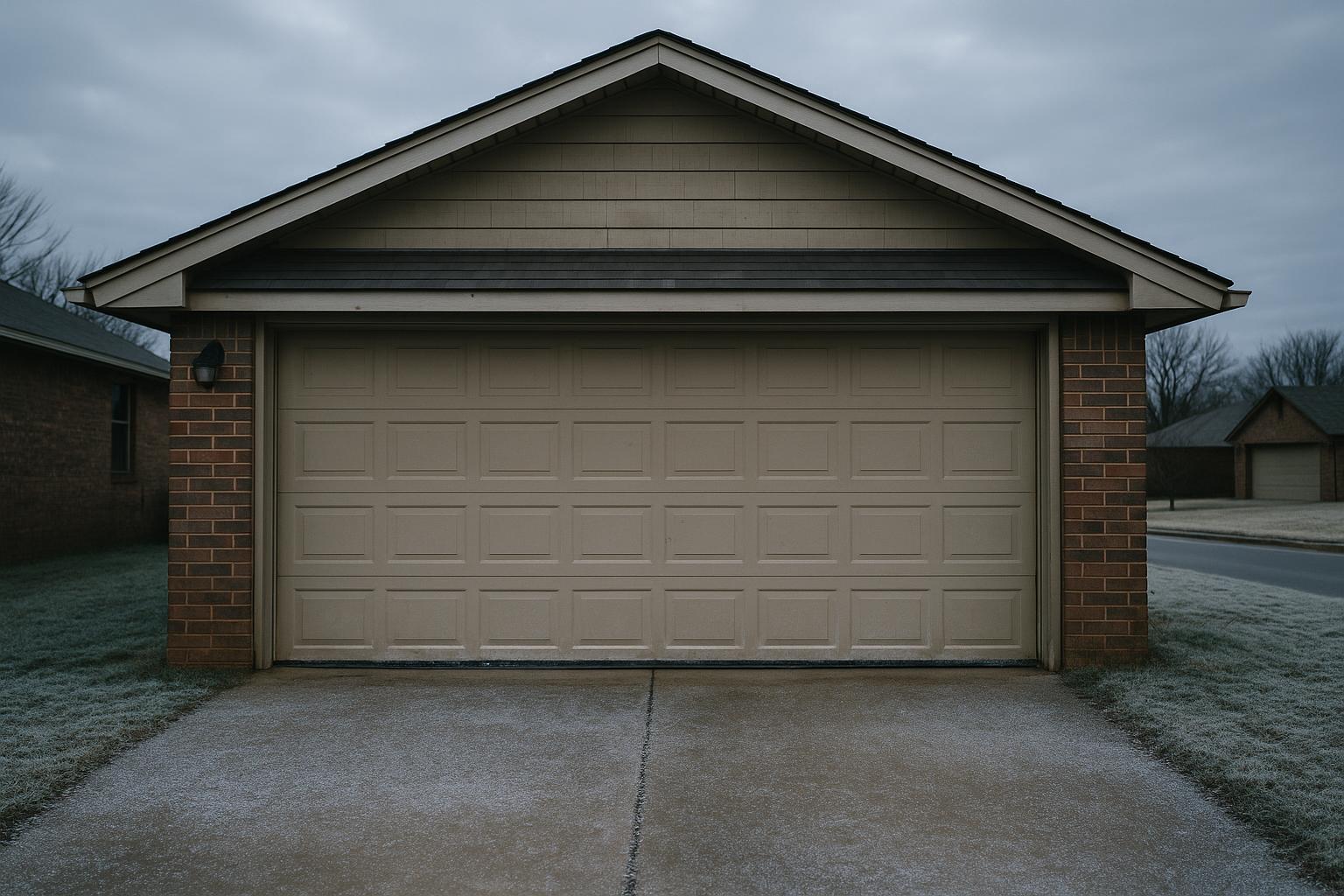
Why Cold Weather Wreaks Havoc on Garage Doors
It's a freezing January morning in Broken Arrow. You're running late for work, you press the button on your garage door opener, and nothing happens — or worse, the motor strains and groans but the door barely budges. Sound familiar?
Cold weather is one of the most common culprits behind garage door malfunctions, and Oklahoma winters can deliver enough freezing temperatures to cause real problems. The good news is that most cold-weather garage door issues are preventable. In this post, we'll walk through the most common reasons your garage door won't open when temperatures drop and what you can do about each one.
1. The Weatherstripping Has Frozen to the Ground
This is the number one reason garage doors get stuck in winter. The rubber weatherstripping along the bottom of your door is designed to create a tight seal against drafts, moisture, and pests. But when water collects under that seal and temperatures drop below freezing, the rubber can literally freeze to your garage floor or driveway.
What to Do
- Don't force it. If you keep hitting the opener button while the door is frozen to the ground, you risk stripping the gears in your opener, snapping a cable, or tearing the weatherstripping right off the door.
- Break the seal gently. Use a flat shovel or a putty knife to carefully chip away the ice along the bottom edge of the door. You can also pour warm (not boiling) water along the seal to melt the ice.
- Prevent it from happening again. Apply a thin coat of silicone spray or cooking spray to the bottom weatherstripping before the next freeze. This creates a barrier that prevents water from bonding the rubber to the concrete.
2. The Metal Components Have Contracted
Metal expands in heat and contracts in cold — it's basic physics. Your garage door system is full of metal parts: tracks, springs, hinges, rollers, and hardware. When temperatures plunge, these components shrink slightly, which can cause the tracks to become misaligned, the springs to lose tension, and moving parts to bind up.
What to Do
- Lubricate all moving parts. Use a silicone-based or lithium-based garage door lubricant on the springs, hinges, rollers, and tracks. Avoid WD-40 for this purpose — it's a solvent, not a long-term lubricant.
- Check the track alignment. Look for gaps between the rollers and the track or any visible bending. If the tracks look off, call a professional rather than trying to bend them back yourself.
3. The Garage Door Springs Have Lost Tension
Garage door springs are under enormous tension, and cold weather can cause them to weaken or even snap. If your springs were already nearing the end of their lifespan, a sudden cold snap might be the final straw. You'll know this is the problem if the door feels extremely heavy when you try to lift it manually, or if you hear a loud bang from the garage — that's the sound of a spring breaking.
What to Do
- Do not attempt to replace springs yourself. Garage door springs are under extreme tension and can cause serious injury or death if handled improperly. This is always a job for a trained technician.
- Call for professional service. At Precision Garage Door of Broken Arrow, we carry springs on our trucks and can typically replace them the same day we arrive.
4. The Opener's Batteries Are Dead or Weak
This one catches a lot of people off guard. Cold weather drains batteries faster than warm weather. If your wall-mounted keypad or remote control isn't responding, the fix might be as simple as replacing the batteries.
What to Do
- Replace the batteries in your remote and keypad with fresh ones.
- If the wall-mounted button inside the garage works but the remote doesn't, the remote batteries are almost certainly the issue.
- If neither the remote nor the wall button works, check your circuit breaker to make sure the opener is getting power.
5. The Lubricant Has Thickened or Hardened
If you used a grease or oil-based lubricant on your garage door's moving parts, cold temperatures can cause it to thicken into a sticky paste. Instead of helping parts glide smoothly, hardened lubricant creates resistance that makes the door sluggish or completely stuck.
What to Do
- Clean off old, thickened lubricant with a rag and a mild degreaser.
- Reapply a silicone-based lubricant that's rated for cold temperatures. These products stay fluid even when it's well below freezing.
- Make this part of your fall maintenance routine so you're prepared before the first freeze hits Broken Arrow.
6. The Garage Door Opener's Force Settings Need Adjustment
Your garage door opener has adjustable force settings that control how hard the motor works to open and close the door. In cold weather, the increased friction and resistance from contracted metal and thickened lubricant can exceed the opener's force setting. When this happens, the opener may start to move the door and then stop, thinking it has hit an obstruction.
What to Do
- Check your opener's manual for instructions on adjusting the open and close force settings. Most openers have small dials or screws on the back or side of the motor unit.
- Make small adjustments — a quarter turn at a time — and test the door after each change.
- If you're not comfortable making these adjustments, a technician can dial in the right settings quickly.
Preventive Maintenance Is the Best Defense
Most cold-weather garage door problems are preventable with a little preparation. Here's a quick checklist to complete before winter settles in:
- Lubricate all moving parts with a cold-rated silicone lubricant.
- Inspect the weatherstripping for cracks, tears, or gaps and replace it if needed.
- Test the door's balance by disconnecting the opener and lifting the door manually. It should stay open about three to four feet off the ground. If it doesn't, the springs may need adjustment.
- Replace remote and keypad batteries before they die at the worst possible moment.
- Schedule a professional tune-up. A trained technician can spot worn springs, fraying cables, and alignment issues before they leave you stuck in the cold.
When to Call a Professional in Broken Arrow
Some cold-weather fixes are simple enough to handle on your own — swapping batteries, applying lubricant, or gently freeing a frozen seal. But if your door still won't open after trying the basics, or if you suspect a broken spring, damaged cable, or misaligned track, it's time to call in a pro.
At Precision Garage Door of Broken Arrow, we service homes and businesses across Broken Arrow, Tulsa, Bixby, Owasso, Jenks, and Coweta. We show up on time, diagnose the problem honestly, and get your door working again — no matter how cold it is outside. If your garage door is giving you trouble this winter, give us a call and we'll take care of it.