
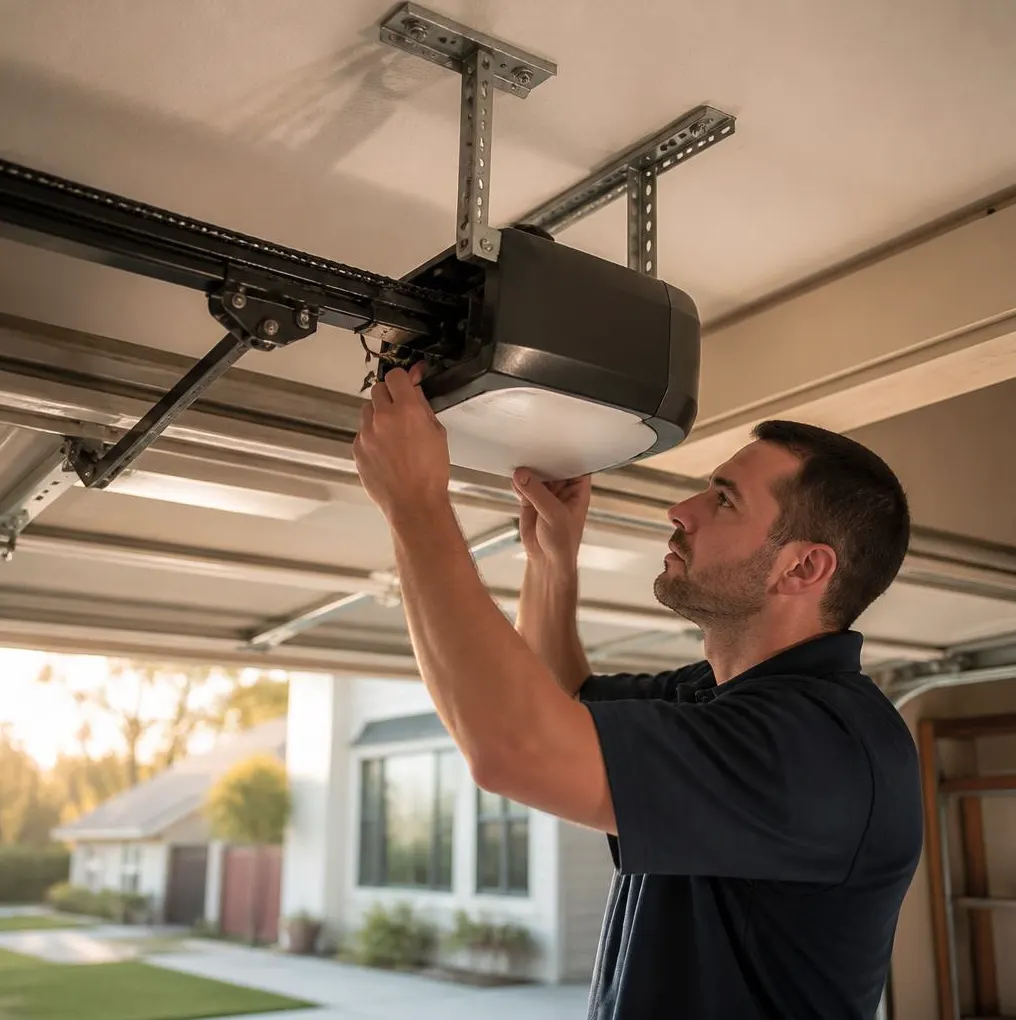
A typical fall call for us starts the same way: a homeowner wakes up after an overnight storm to find the garage door bowed inward, a panel caved, or the whole door sitting crooked on bent track. Sometimes it's hail dents across the top sections. Sometimes the door looks fine but won't move because the opener rail twisted when the door flexed. In almost every case, the homeowner is surprised that the garage door took the hit instead of the roof or siding. It shouldn't be a surprise — it's usually the most vulnerable part of the house.
Why the Garage Door Is a Home's Weakest Wall
Think about the structure of a typical house. Exterior walls are short spans, braced by studs, sheathing, and tie-downs, built to resist lateral pressure. The garage door opening is different: it's the largest unsupported opening in the home, covered by a door made of thin steel or composite panels connected by hinges and rollers running in a track that's only screwed to the framing at intervals.
When wind hits a closed house, pressure builds on the windward side and drops on the leeward side. A garage door has to resist that pressure difference across a wide, lightweight panel with no interior bracing unless it was built with reinforcement. Once the panels start to flex, the rollers can pop out of track, the track itself can bend, and the whole door can buckle inward or get sucked outward. That's a structural failure, not just a cosmetic one — and once the door fails, wind pressure gets inside the garage and can push upward on the roof deck from underneath, which is why building codes in wind-prone regions increasingly call for wind-rated garage doors on new construction.
What This Time of Year Brings Locally
Fall in this part of Oklahoma means fast-moving frontal systems — the kind that can bring a calm afternoon and a severe thunderstorm warning within the same hour. Along with the rain comes the combination that actually damages doors: straight-line wind gusts, hail, and blowing dust ahead of the front. A door that's been fine all summer can take a direct hit from a gust front with little warning, and older doors or doors without horizontal reinforcement are the ones most likely to show it.
Pre-Storm Checklist
Most of this takes less than an hour and doesn't require tools beyond a wrench and a ladder.
- Check the track for straightness. Stand back and sight down the vertical tracks on both sides. Any bow, gap from the wall, or loose mounting bracket is a point of failure in high wind.
- Tighten hinges, rollers, and track bolts. Vibration from daily use loosens hardware over time. A door with tight connections flexes less under pressure.
- Inspect the weatherstripping and bottom seal. Gaps let wind-driven rain and dust into the garage and reduce the door's ability to resist pressure changes evenly across its surface.
- Look at the panels themselves. Rust spots, dents, or delamination on older steel doors are weak points that will give way first.
- Confirm the opener has battery backup, if equipped. Storms that knock out power often hit at night; a battery backup lets you get the car out or close the door manually without fighting a dead opener.
- Clear the area around the door. Loose yard furniture, trash cans, or landscaping debris near the garage become projectiles in high wind and can strike the door directly.
Reinforcing an Older Door
Doors built more than 10–15 years ago rarely have the horizontal bracing that newer wind-rated doors include. A retrofit option is a horizontal strut kit — steel braces bolted across the back of each panel that stiffen the door against wind load. It's a reasonable middle step for a door that's otherwise in good shape but wasn't built with storm resistance in mind. For a door that's already showing rust, sagging, or repeated track problems, replacement with a door rated for higher wind pressure is usually the better long-term move, especially if the garage shares a wall with living space.
After the Storm
Once the weather clears, walk the door before you run it. Look for new dents or dings from hail, check that the door still sits flush in the opening, and listen for any new grinding or scraping when it moves. If the door hesitates, reverses unexpectedly, or won't fully seat on the floor, stop using it and have it looked at — a bent track or a shifted panel can get worse fast if it keeps cycling under strain.
When to Call Precision Garage Door of Broken Arrow
If your door took a direct hit — a bent track, a caved panel, an opener that's struggling after the power blinked — that's a same-visit repair call, not a wait-and-see situation. Our technicians will check the tracks, rollers, panels, and opener together, since storm damage rarely shows up in just one spot. For homeowners who want to get ahead of the next front, we also offer garage door maintenance visits that cover hardware tightening, track alignment, and a full inspection before storm season does the finding for you. And if your current door is older, undersized for wind load, or has already been patched more than once, our garage door installation team can walk you through options built for the wind and hail this area actually sees.
Don't wait for the next line of storms to find out how your garage door holds up. Call Precision Garage Door of Broken Arrow today and get it checked, braced, or replaced before the wind decides for you.