
Your Garage Door Shouldn't Sound Like That
You press the button, and instead of the smooth hum you're used to, your garage door greets you with a symphony of grinding, popping, or screeching. If you're a homeowner in Broken Arrow, you've probably experienced this at least once — especially during Oklahoma's temperature swings, which can take a toll on garage door components.
The good news is that most garage door noises point to identifiable, fixable problems. The bad news is that ignoring them usually makes things worse — and more expensive. Let's break down the most common sounds your garage door makes, what they mean, and what you should do about each one.
Grinding or Scraping Sounds
A grinding noise is one of the most common complaints we hear from homeowners. It typically means metal is rubbing against metal somewhere in the system, and it usually points to one of these culprits:
- Worn rollers: Steel rollers wear down over time and can start grinding against the track. Nylon rollers are quieter and last longer, and upgrading is a relatively simple fix.
- Misaligned tracks: If the vertical or horizontal tracks have shifted even slightly, the door can scrape against them as it moves. This needs to be addressed quickly before the door gets stuck or jumps off the track entirely.
- Lack of lubrication: Dry hinges, bearings, and rollers create friction that produces that unmistakable metal-on-metal grinding. Regular lubrication is one of the simplest maintenance tasks you can do.
If you hear grinding, start by visually inspecting the tracks for obvious bends or gaps. But if the tracks look fine and the noise persists, it's time to have a technician take a closer look.
Squealing or Squeaking
A high-pitched squeal every time your door opens or closes is hard to ignore — and your neighbors in Broken Arrow probably aren't thrilled about it either. Squealing usually comes down to:
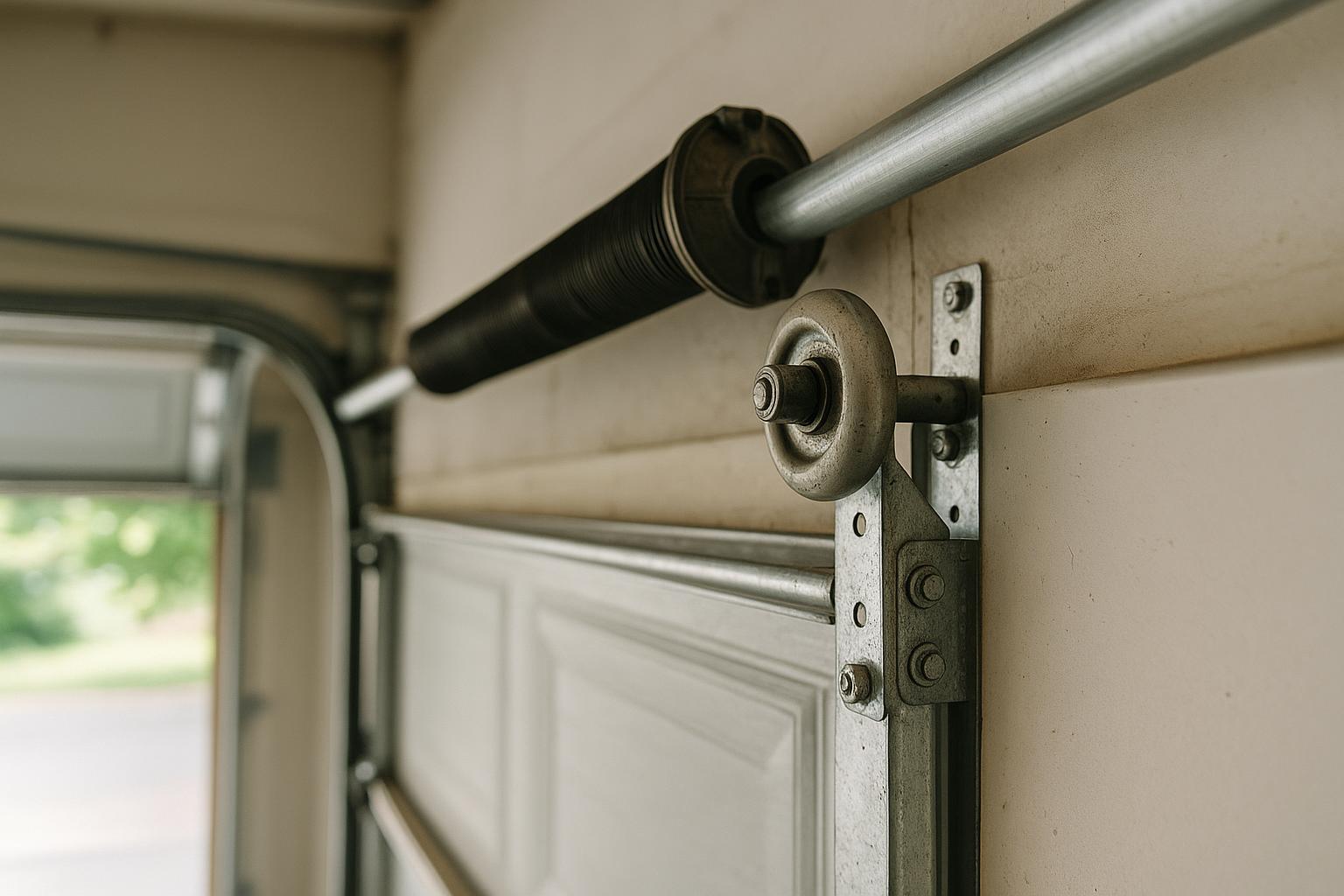
- Dry or rusted springs: Torsion springs above the door and extension springs along the tracks need periodic lubrication. When they dry out, they squeal under tension.
- Worn weather stripping: The rubber seal along the bottom of the door can harden and drag against the floor, creating a squeaking sound.
- Bearing issues: The bearings inside the rollers or at the end of the torsion spring shaft can wear out and produce a persistent squeal.
Try applying a garage door-specific lubricant (not WD-40, which is a solvent, not a lubricant) to the springs, hinges, rollers, and bearing plates. If the squeal continues, the component may need replacement rather than just lubrication.
Rattling or Vibrating
Rattling sounds like something is loose — and usually, something is. Common sources include:
- Loose hardware: The nuts, bolts, and screws that hold your garage door system together can loosen over hundreds of open-and-close cycles. A simple tightening with a socket wrench can often solve the problem.
- Loose chain or belt: If you have a chain-drive opener, a loose chain will slap and rattle during operation. Belt-drive openers can develop similar issues if the belt stretches over time.
- Vibrating opener: The garage door opener unit itself can vibrate against the ceiling mount, especially if the anti-vibration pads have worn out or were never installed.
Rattling is usually the easiest noise to fix yourself. Go through and tighten all visible hardware, and check that the opener is securely mounted. If the chain or belt needs adjustment, that's a quick fix for a professional.
Popping or Snapping Sounds
A sudden pop or snap is more alarming than annoying — and it should be. These sounds can indicate:
- A broken spring: When a torsion spring breaks, it releases stored energy and makes a loud bang that homeowners sometimes mistake for something falling in the garage. If you hear this and your door won't open, a broken spring is the most likely cause.
- Popping hinges: Hinges that are binding or have worn pin holes can pop as the door bends through its sections. This puts stress on the door panels and can lead to cracking.
- Cable issues: Frayed or slipping cables can snap against components and create sharp popping sounds.
Important: If you suspect a broken spring or cable, do not attempt to open or repair the door yourself. These components are under extreme tension and can cause serious injury. Call a professional immediately.
Banging When the Door Closes
If your garage door slams shut the last few inches instead of closing smoothly, the problem is usually related to the springs or the opener settings:
- Worn springs: Springs that are losing tension can't control the door's weight on the way down, causing it to drop and bang at the bottom.
- Opener force settings: The close-force setting on your opener may need adjustment. If it's set too high, the door closes with more force than necessary.
- Broken or disconnected cables: If one of the lift cables has snapped, the door may descend unevenly and slam on one side.
A banging door isn't just annoying — it's damaging the door, the tracks, and the floor seal every time it happens. Getting it fixed sooner saves you money in the long run.
When to DIY and When to Call a Pro
Some garage door noise issues are safe to handle on your own:
- Lubricating springs, hinges, rollers, and tracks
- Tightening loose bolts and screws
- Replacing worn weather stripping
But other problems require professional tools, training, and experience:
- Spring replacement or adjustment
- Track realignment
- Cable repair or replacement
- Opener chain or belt adjustment
- Roller replacement (especially on doors with high-tension springs)
If you're not sure which category your noise falls into, it's always safer to ask a professional. A quick inspection can identify the problem before it turns into a breakdown.
Keep Your Garage Door Running Quietly in Broken Arrow
Strange noises are your garage door's way of asking for help. The sooner you identify and address the source, the less likely you are to face an unexpected — and expensive — failure. Regular maintenance, including lubrication and hardware checks, goes a long way toward keeping things quiet and functional.
At Precision Garage Door of Broken Arrow, we diagnose and fix noisy garage doors every day across Broken Arrow, Tulsa, Bixby, Owasso, Jenks, and Coweta. We show up on time, explain exactly what's going on, and fix it right the first time. If your garage door is making a sound it shouldn't, give us a call and let's get it sorted out.